The Jewish Tourist: Boston
The Jewish Tourist is an occasional series covering the Jewish sights, foods, and experiences I've encountered on my travels. Today we're heading to Boston over the High Holidays for a Jewish tavern and house of learning, Kol Nidre in a historic synagogue, and amazing babka.
My husband travels to Boston each fall for his company's in-person work week, and since I work remotely, I get to tag along. Our most recent trip fell over the High Holidays, so I used it as an opportunity to connect with the local Jewish community—the Greater Boston area is home to the fourth-largest Jewish population in the country, with nearly a quarter million Jews.
Lehrhaus
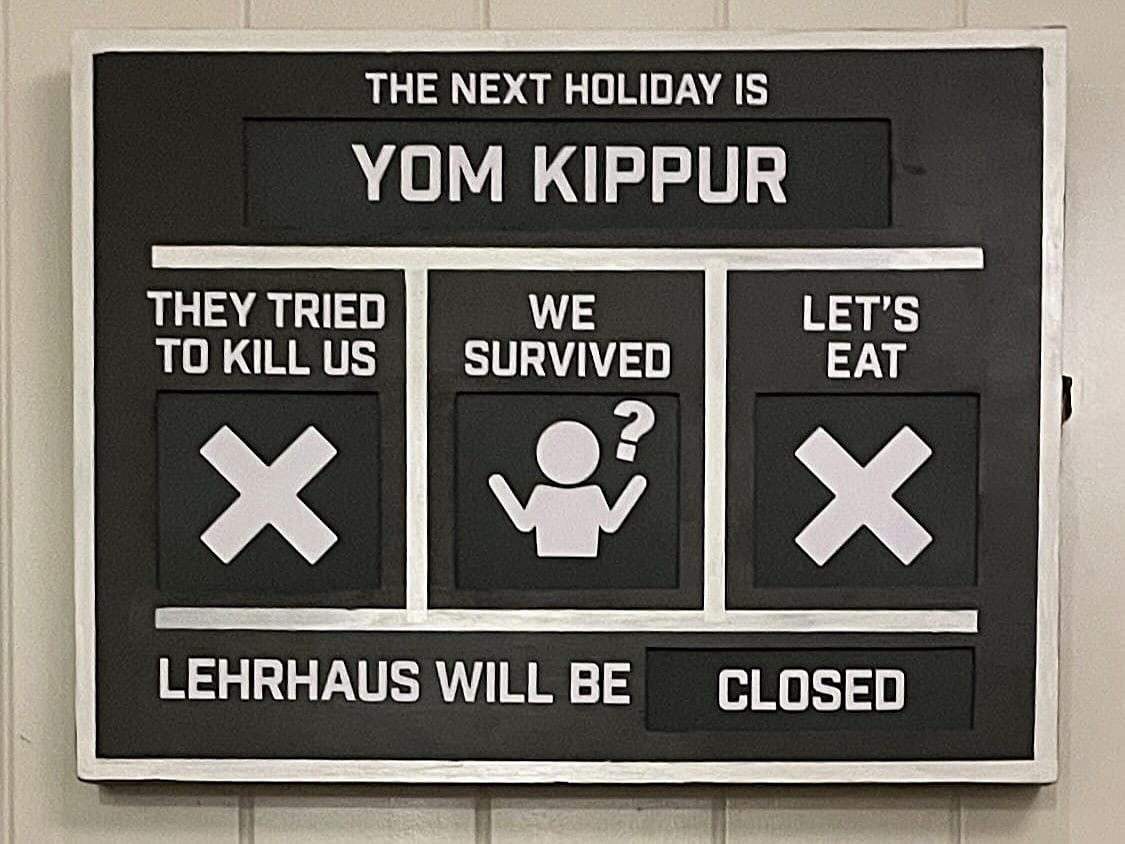
Located in nearby Cambridge, Lehrhaus is a non-profit Jewish tavern and house of learning. They serve a kosher menu inspired by the Jewish diaspora, regularly host Jewish events and classes, and function as a co-working space during the day. There are cultural references that many Jews will instantly clock, like a Lactaid vending machine, the Hannah Arendt mural in the women's restroom, and a sign riffing on the oft-repeated joke that the theme of Jewish holidays is "they tried to kill us, we survived, let's eat." However, it's also a welcoming, education-focused environment, with Talmud-style menus that provide context for ingredients, dishes, and cultural references that may be unfamiliar. As a nerdy Jew who identifies with the diversity of the diaspora, I was in my element, but my non-Jewish husband also loved Lehrhaus—the food and cocktails are excellent, and the atmosphere was very inclusive. I wish that one of their classes had coincided with our visit, because the wide-ranging topics look fascinating.
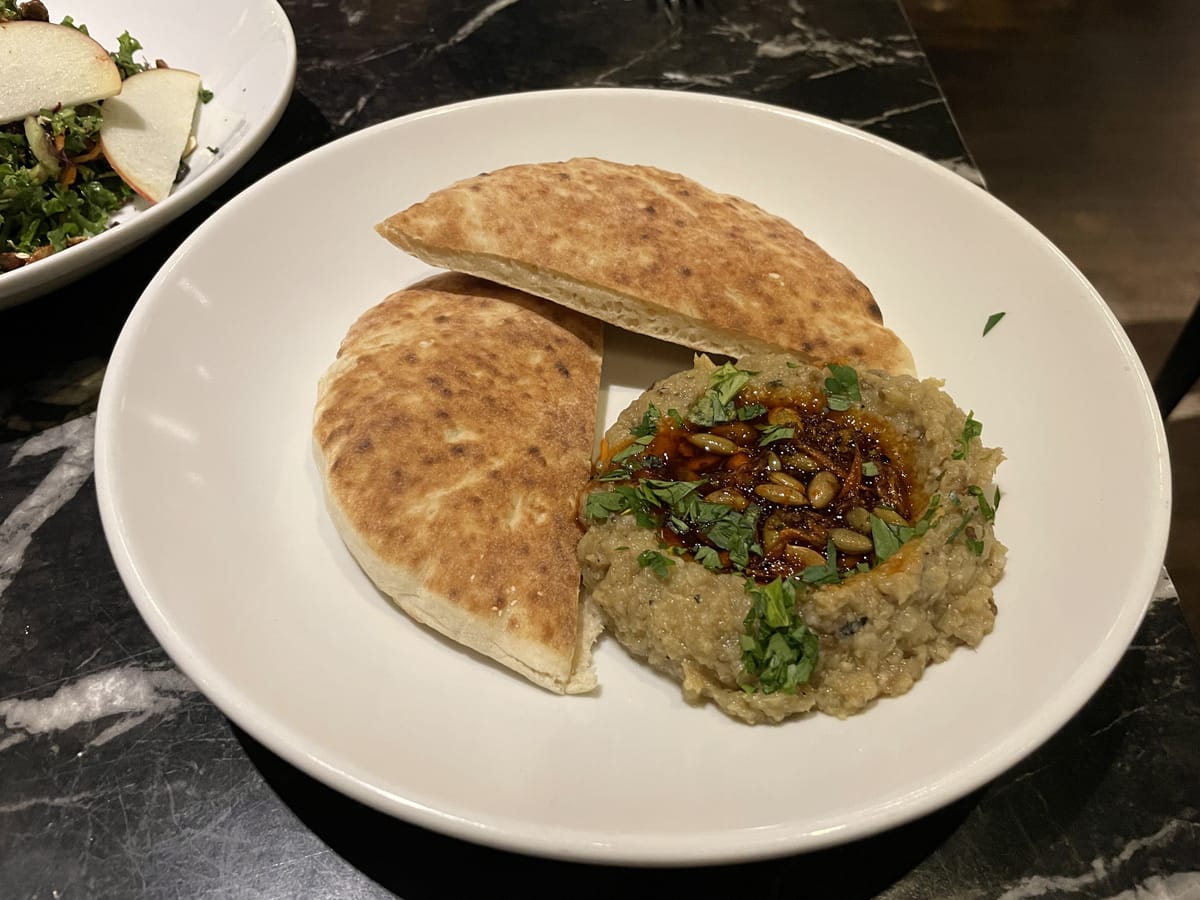
Lehrhaus's menu changes frequently but always has a global focus. We enjoyed the marinated mixed olives with berbere, a nod to the Ethiopian Beta Israel community; the Levantine-inspired smokey eggplant dip with za'atar; a salad that included symbolic Rosh Hashanah foods like pomegranate, honey, leeks, and cabbage; and a mac and cheese kugel. My husband's Colonia Roma cocktail was a highball inspired by the Syrian-Mexican Jewish community, and my Day of Rest cocktail featured challah-infused bourbon and red wine.
With 32 percent of U.S. Jews identifying as "no particular branch" rather than with a specific movement or denomination, Lehrhaus feels like a vibrant, engaging alternative option to the traditional synagogue. I'd love to see the model replicated closer to my home in Minneapolis—in the meantime, I'm looking forward to stopping by Lehrhaus whenever I'm in Boston.
Kol Nidre at the Vilna Shul
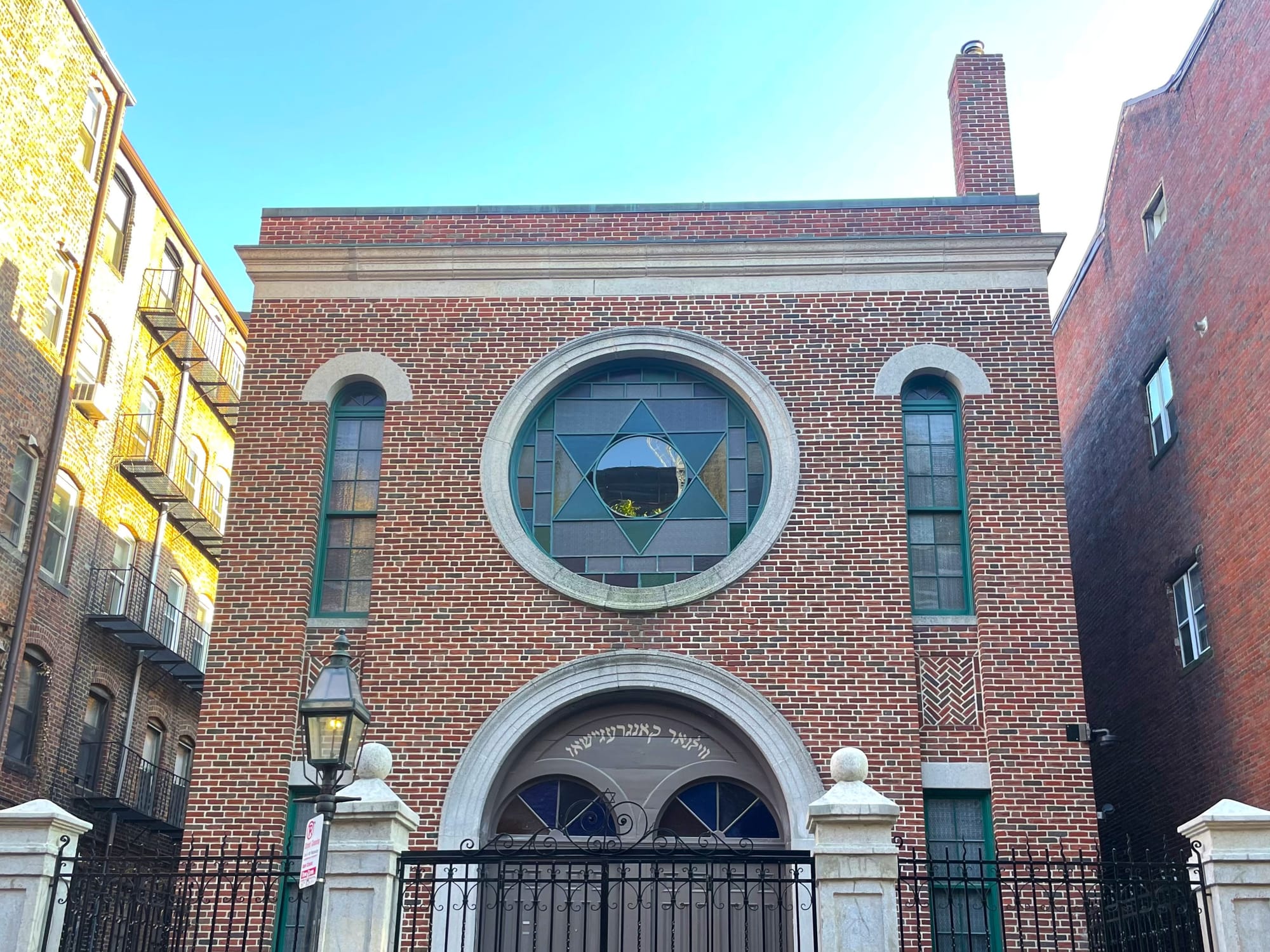
The Vilna Shul is a historic Orthodox synagogue in Boston's Beacon Hill neighborhood, built in 1919 for a congregation of immigrants primarily from Vilna, Lithuania. Over the decades, the Jewish community left the area, and after the last service was held in 1985, the synagogue fell into disrepair. Eventually, the Vilna Shul was restored and reimagined as a cultural center and museum, hosting art exhibits, lectures, concerts, networking events, family activities, and more.
Although the Vilna Shul doesn't hold weekly Shabbat services, they do have services during the High Holidays. I attended Kol Nidre and it was a deeply moving experience. At the beginning of the service, light was streaming in through the skylight and stained glass windows, and as dusk fell, the increasing dimness of the space underscored the solemnity of the occasion. Since the restoration of the Vilna Shul is still ongoing, the sanctuary's walls are covered with peeling layers of paint that offer evocative glimpses of the original 1920s murals beneath.
As a childfree-by-choice convert, I struggle with the concept of l'dor vador, a Hebrew phrase that refers to Jewish tradition being passed down from generation to generation. However, I felt l'dor vador on a visceral level while reciting ancient prayers in a century-old space, surrounded by fellow Jews of all ages and backgrounds.
Bakey
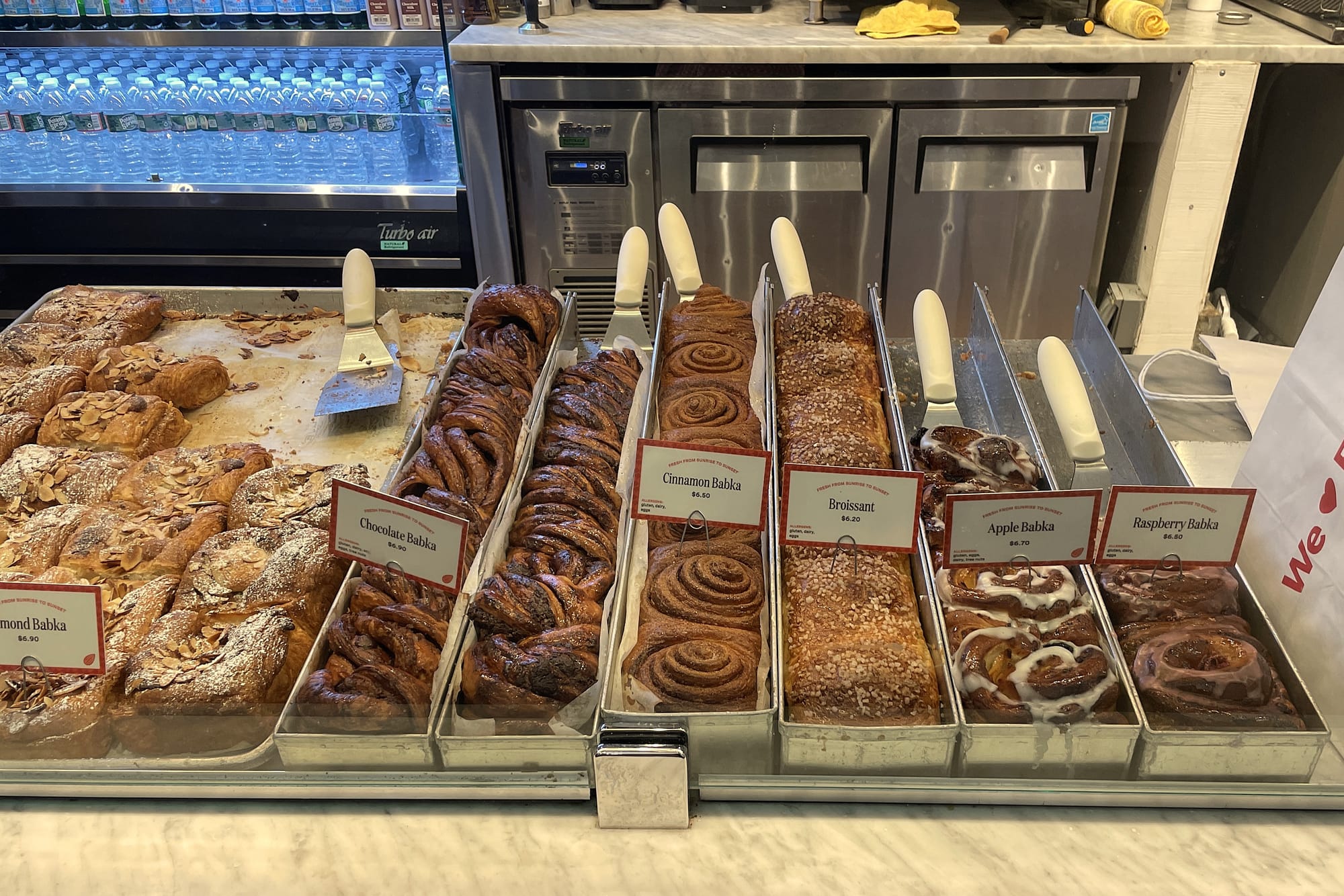
Post-Yom Kippur, I enjoyed a fabulous slice of chocolate babka from Bakey's Faneuil Hall location. The Boston-based bakery chain was co-founded by James Beard Award-nominated, Danish-Israeli baker Uri Scheft. Although they're primarily known for their various creative flavors of babka, Bakey also sells cookies, croissants, burekas, bagel sandwiches, and salads.
Bakey's chocolate babka is incredibly rich, even by babka standards. It's extra-buttery and flaky, swirled with a hazelnut praline spread, and then topped with a vanilla syrup. The cinnamon version (because of course I had to make a return trip) is much more understated and tastes like a croissant/cinnamon roll hybrid. Do I wish I had bought more chocolate babka to take home? Will I be returning to Bakey on my next trip to Boston? Yes and yes.
Further reading
The Jewish Tourist: NYC—Eldridge Street Synagogue, Yonah Schimmel, Russ & Daughters